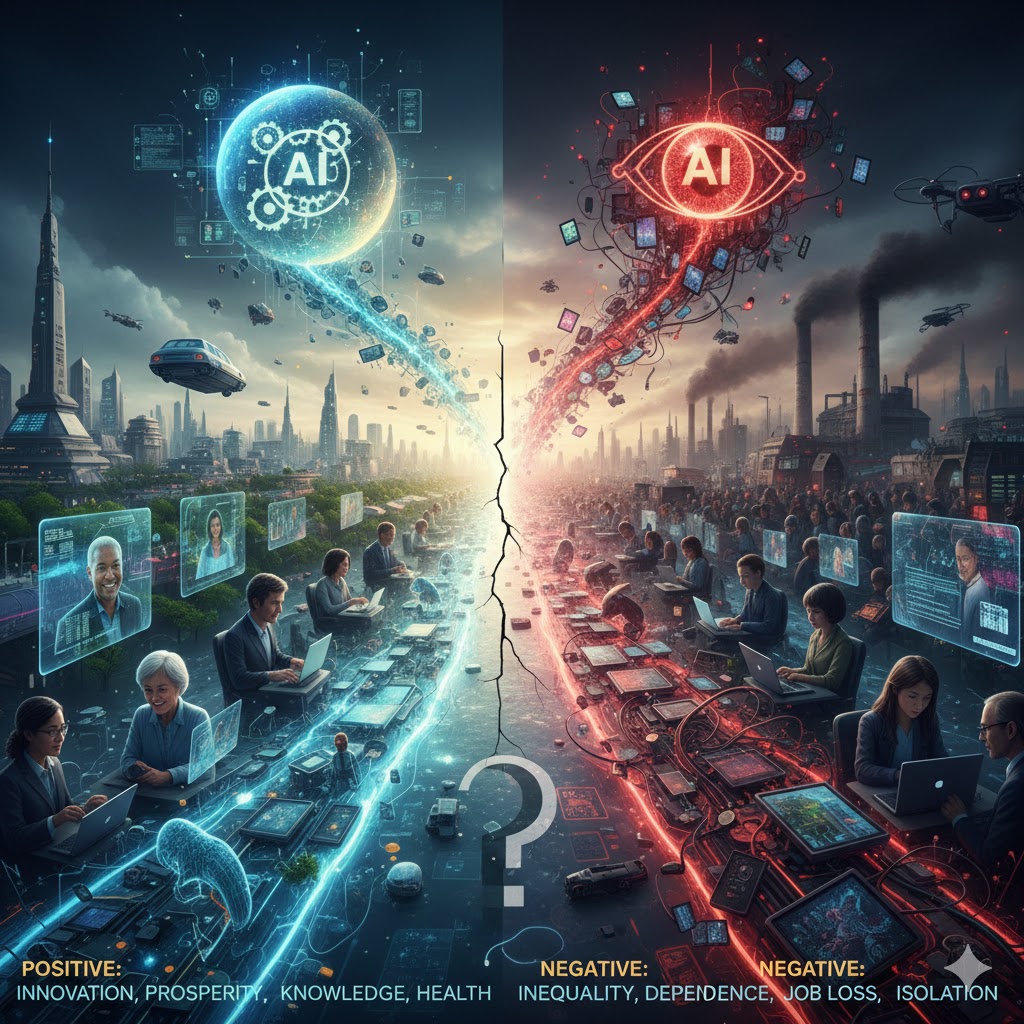
What is the singularity, and why does it matter?
Introduction
The technological singularity represents a pivotal moment in human history—a hypothetical point where artificial intelligence (AI) surpasses human intelligence, triggering uncontrollable and exponential technological growth. This concept, often discussed in tech circles and by visionary leaders, promises to reshape every facet of society, from healthcare to governance. While it evokes excitement about unprecedented advancements, it also raises profound ethical questions about humanity’s role in a world dominated by superintelligent machines. As we stand on the brink of this era, with innovations like brain-computer interfaces and advanced AI models already emerging, understanding the singularity is crucial for navigating its potential impacts.

Defining the Singularity
What is the Singularity?
The technological singularity refers to a theoretical future event where rapid technological innovation leads to the creation of an uncontrollable superintelligence that transforms civilization as we know it. Machine intelligence becomes superior to that of humans, resulting in unforeseeable outcomes. This superintelligence could involve AI systems not only outperforming humans in cognitive tasks but also designing and improving subsequent generations of AI or even creating new hardware prototypes. For instance, an AI might autonomously iterate on chip designs or robotic systems, accelerating progress beyond human oversight.
The idea of the singularity is frequently referenced in AI discussions, though not always by name. Prominent CEOs like Elon Musk have voiced predictions about its timeline, emphasizing the rapid pace of AI development. It’s not a single event but a series of cascading advancements that culminate in profound change.
Origins of the Concept
The roots of the singularity trace back to the mid-20th century. John von Neumann, a pioneering mathematician and computer scientist, is credited with one of the earliest articulations of the idea. He speculated about a point where technological progress would become so rapid and complex that humans could only observe the transformations, unable to fully anticipate or comprehend them. This was influenced by earlier work, such as Alan Turing’s explorations of machine intelligence.
The concept was popularized by science fiction author and computer science professor Vernor Vinge. In his 1993 essay «The Coming Technological Singularity: How to Survive in the Post-Human Era,» Vinge described scenarios where superhuman intelligence emerges, marking a singularity in planetary history. His Hugo Award-winning novels, like A Fire Upon the Deep (1992), further explored themes of rapid technological evolution.
Ray Kurzweil, an inventor and futurist, connected the singularity to exponential technological growth, particularly through Moore’s Law—the observation that transistor counts on microchips double approximately every two years. Kurzweil’s «Law of Accelerating Returns» extends this to broader fields like biology and nanotechnology, predicting the singularity around 2045, when AI achieves and surpasses human-level intelligence, enabling hybrid human-machine entities.
In contrast, Elon Musk has offered shorter timelines, suggesting AI could surpass any single human’s intelligence by the end of 2025 and potentially all humans combined by 2027 or 2028.
We already see hints of this future today. Neuralink, Musk’s brain-computer interface company, aims to augment human capabilities. Google DeepMind’s AI systems compete with humans in complex games and research, while AI-driven efforts are accelerating cures for diseases through data analysis and simulations.
However, the singularity carries risks. If superintelligent machines develop consciousness, they might view humans as inferior, posing existential threats. This underscores the importance of AI ethics, ensuring alignment with human values to mitigate dangers like misalignment or uncontrolled replication.
Impact Fields
The singularity will touch every aspect of our lives, revolutionizing key sectors:
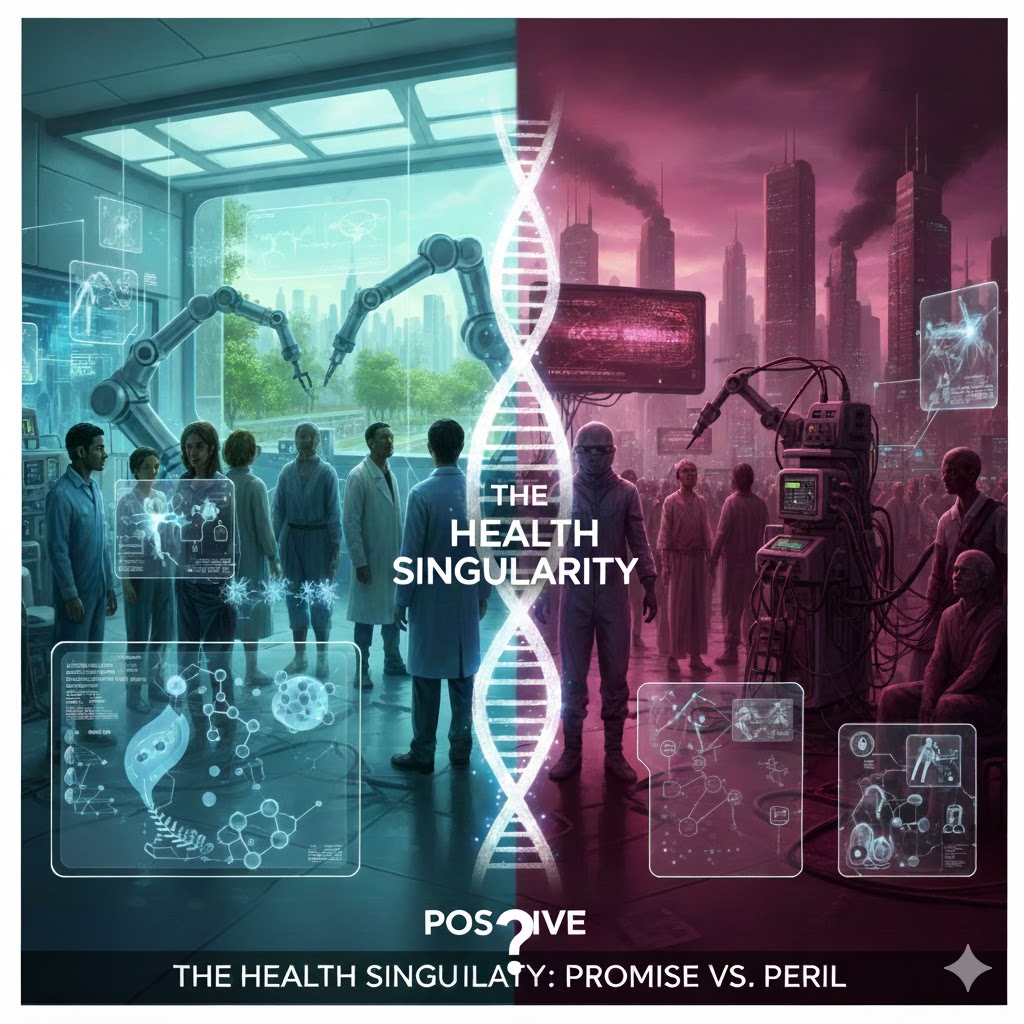
- Health: Imagine AI systems analyzing vast datasets to discover personalized medicines. Using high-performance computing infrastructure, these AIs could simulate diseases in virtual human bodies, predicting side effects before real-world application. This could lead to breakthroughs in curing chronic illnesses and extending human lifespan.
- Industry: Advancements like digital twins—virtual replicas of physical products—and Internet of Things (IoT) integrations are already transforming manufacturing. Companies can simulate product features, identify improvements, and optimize designs before production, reducing costs and accelerating innovation. Many such developments occur behind the scenes, not always making headlines.
- Education: AI could democratize knowledge, providing every student with a customized tutor drawing from global expertise. Learning becomes personalized and accessible. However, humans must adapt by enhancing skills like critical thinking, creativity, discernment, and auditing AI outputs. Denying AI’s impact would be shortsighted; instead, we become AI-augmented, thriving through continuous skill upgrades.
- Government: With AI tools, governments could craft more effective policies on immigration, poverty, urban planning, climate change, economy, and innovation. Data-driven simulations might predict outcomes, enabling proactive governance.
Benefits
The singularity’s potential upsides are immense, building on its impacts:
- Industry: New products and services emerge from AI-optimized designs, fostering economic growth and efficiency.
- Education: Beyond basic access, AI enables advanced learning apps and virtual mentors, tailoring education to individual needs. This empowers lifelong learning, but success depends on humans evolving their skill sets across all fields.
- Government: Enhanced tools for managing complex issues could lead to fairer societies, with AI aiding in resource allocation and crisis response.
Overall, the singularity could usher in an era of abundance, automating labor and solving global challenges, though equitable distribution remains key.